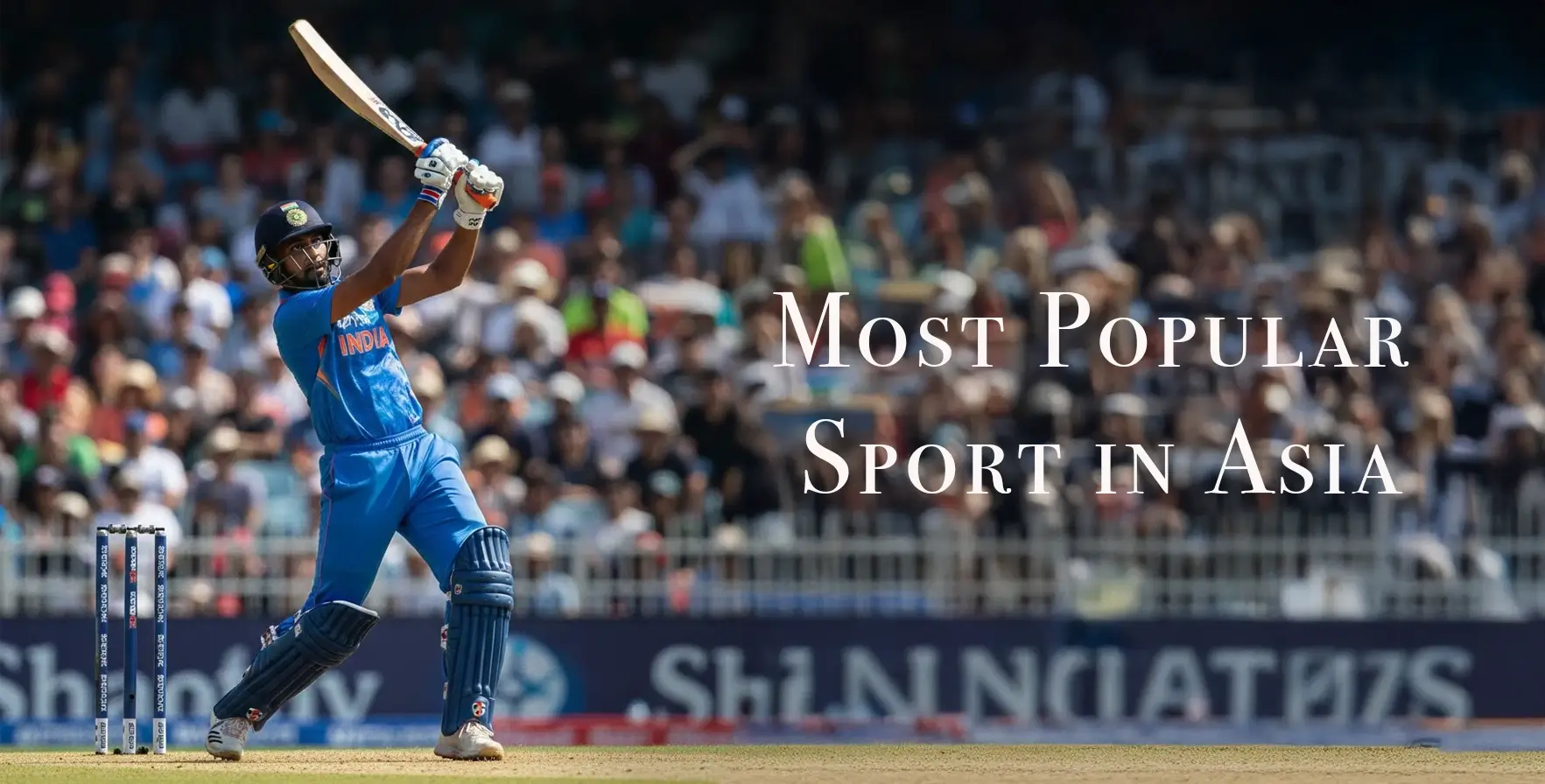
Most Popular Sport in Asia
Being the most populated continent on Earth, and being home to vast amounts of diverse cultures, languages, traditions etc… Asia is an extremely diverse and vibrant area. One aspect of this diversity is how popular sports are in each individual country.
From the many different types of sports played or followed throughout Asia, cricket is the most widely played or followed in Asia, specifically in South Asian countries like India, Pakistan, Bangladesh and Sri Lanka.
This article aims to share some of the reasons that cricket is such a dominant sport within Asia by looking at its historical background, its cultural meaning, its economic significance and the emotion it brings out in millions of followers around the world.
Origin of Cricket
The common historical context of cricket (the game of cricket and the sport) began with British colonization. Cricket was introduced to India by British traders, and by the time the British were serious in their attempts to colonize India in the 18th century, cricket was already gaining popularity.
The first cricket clubs were established in the 19th century and provided the foundation for developing cricket as a sport in Asia. By the early 1900’s, cricket was so well entrenched in Indian culture that matches drew large crowds and received widespread attention.
Cricket continued to grow in India and Pakistan after the partition of India in 1947 and following the establishment of both independently sovereign states. More than just a sport, the stepped-up growth of the game paved the way for cricket to bring together people of diverse political and social backgrounds and has become a unifying force within a demographic region that is possibly the most diverse and most complicated.
The establishment of national governing bodies and boards of control for cricket in both India and Pakistan (the BCCI and PCB respectively) created a formalized cricket structure and allowed the growth of international competition amongst member nations further contributing to and expanding the number of nations competing internationally today.
Importance in Culture
In many Asian countries such as South Asia, cricket plays a large role within the culture. It is about more than simply playing a game of cricket, it is an important part of the national pride and identity of the country in which you are from. In India, for example, cricket often becomes referred to as a religion with players such as Sachin Tendulkar, Kapil Dev and Virat Kohli becoming demi-gods for the fans of the sport.
There are many traditions and a great deal of history that cover the sport of cricket and it has become woven into the very fabric of society, as well as through all forms of art, literature, and popular culture.
The games themselves are social gatherings that unite people to share in the spirit of celebration and togetherness. Throughout urban environments and rural villages alike cricket provides a common thread that unites diverse communities.
Major Events and Competitions
Cricket has grown in Asia as an international sport largely through the support of huge worldwide events and tournaments that have garnered many fans.
Many fans, particularly in Asia, follow the ICC Cricket World Cup. India’s wins in 1983 and 2011 and Pakistan’s win in 1992 are seen as very significant events for the sport to establish itself as the premier sporting event in Asia.
The ICC T20 World Cup has proven to be very popular because it allows the game to be fast-paced and entertaining, unlike traditional forms of the game such as Test and One Day International (ODI).
The Indian Premier League (IPL), created in 2008, has changed the game immensely by developing a franchise-based tournament. The IPL attracts the best players from all across the world; thus, many high-intensity, high-profile matches create large television viewership numbers and large economic impact.
Economic Impact of Cricket
Cricket has a large financial impact in Asia with many positive contributions to the overall economy. The amount of money generated through cricket comes from broadcasting, sponsorship, ticket sales and merchandise.
One of the most powerful cricket boards in the world, the Board of Control for Cricket in India (BCCI), is located in India and has had an effect on how cricket is organized and delivered to fans everywhere.
One of the great examples of cricket’s financial impact is the Indian Premier League (IPL). The success of the IPL has led to a financial model that allows entry by large corporations, celebrities and business leaders to invest into the league and receive returns.
Because of the IPL’s success, other countries such as Pakistan and Bangladesh have created their own cricket leagues (Pakistan Super League and Bangladesh Premier League) to benefit financially.
Media and Technology: Coverage of the Sport
Cricket has become the most popular sport in Asia because of how it’s covered by the media. Fans are kept up-to-date on cricket matches and news through television, radio, and the internet.
Thanks to advances in technology, cricket has been revolutionised in terms of how it is consumed. Fans can now watch their preferred team and player live through streaming platforms and social media no matter where they are located.
Social media platforms allow fans to communicate, express views, and celebrate their favourite teams. The media’s relationship with cricket strengthens its global popularity.
Fan Engagement and Community
Cricket has no equal in terms of its capacity to engage fans and build community.
Fans have a profound emotional attachment to their team, often passed down from generation to generation. Cricket clubs and national teams contribute greatly to the identity and pride of a community.
The matchday experience – complete with rituals, chants and companionship – creates a strong connection for fans and players alike.
Grassroots and Youth Development
Grassroots and youth development programs form the basis of cricket’s growth and success within Asia.
There are numerous academies and training initiatives throughout Asia that develop young cricketers by enhancing their talent and skills. These programs provide both athletic and personal development.
Various initiatives, such as National Cricket Academy programs, aim at growing the base of cricket at the grassroots level, making it accessible to children of all backgrounds.
Innovation and Technological Advancements
Innovation and technological advancements have informed how cricket has evolved.
Technologies such as the Decision Review System (DRS) and Hawk-Eye have improved the accuracy and fairness of the game. Wearable technology and data analysis help teams assess player performance and improve strategies.
Virtual reality (VR) and augmented reality (AR) are also creating immersive experiences for cricket fans and deepening engagement.
Summary
Cricket is currently the most popular sport in Asia due to many factors: its historical roots, cultural importance, major tournaments, economic impact, media interest, fan involvement, youth development and technological developments.
It brings together people of different backgrounds, inspires passion and loyalty, and creates lasting memories. As cricket evolves and grows, it will remain the most loved and active sport in Asia.
2 thoughts on “Why Cricket Is the Most Popular Sport in Asia”