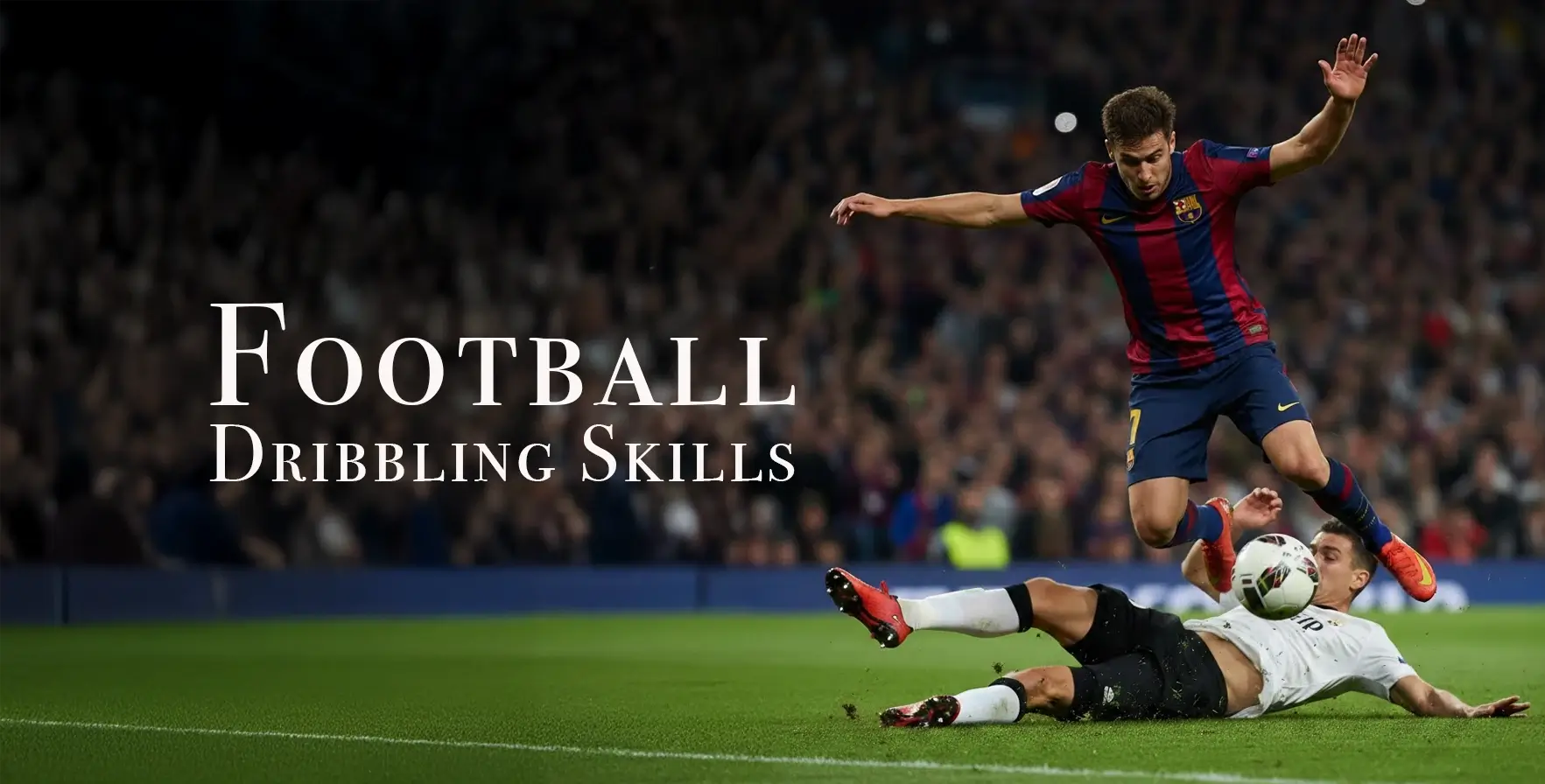
Introduction to Football Dribbling Skills
None of us would disagree that dribbling is one of the essential/fun skills you are going to learn as footballer. Using your foot(s), and controlling the football while also moving around the pitch, avoiding defenders and creating opportunities to score can make mastering dribbling a major part of your overall ability to retain possession, move through tight situations, and make key plays on the field. Practicing, developing your technique and knowing how to play will be very important to improving your dribbling ability. The following article aims to give you ideas on how you can improve your overall dribbling skills in the game of football.
The Primary Components of Dribbling
If you want to improve dribbling you must first understand the fundamentals of controlling the ball and moving without being hit. You should start learning how to keep control of the football between your feet via multiple parts of your foot (inside, outside, and the sole). Learning how to keep the ball close while moving is a critical piece of the puzzle, because this keeps you from losing complete control of the ball when you are dribbling. It is extremely important that you develop your soft touch so you will be able to dribble the ball with precision. Spend time practicing different types of drills to develop your ability to maintain your balance while also controlling the ball while moving fluidly. Mastering these skills is the first step towards feeling comfortable and confident playing with the ball.
Increasing Agility and Footwork
Developing agility and quick footwork is essential for all forms of effective dribbling. You can build on your agility and quickness by including agility drills in your training. Various types of agility-drills, including cone, ladder, and quick feet exercises, will improve your ability to quickly change direction while maintaining control of your ball. In addition to performing different types of dribbles, practice your dribble going forward, backward, and sideways. Also, practice performing quick stops, starts, and changes of pace. Doing these agility drills will help you become more elusive and difficult to predict on the field, thereby making it easier to get past defenders.
Improving Ball Control
The foundation of effective dribbling lies in your ability to control the ball. To improve your ability to control the ball while you dribble, practice a variety of dribbling techniques such as the inside-outside dribble, roll-over and drag-back (all examples of several different types of dribbling techniques). Make a point to practice these moves with both feet so that you become ambidextrous and versatile. Additionally, use small-sided games and tight-space drills to replicate game conditions and work on maintaining control of the ball in close quarters. Another way to improve your ball control while dribbling is to practice at a variety of speeds (slow, moderate and fast) so that you become comfortable controlling the ball under multiple conditions. Consistent practice of the techniques discussed will improve your touch and reaction speed so that you become a more effective dribbler.
How to Master Body Feinting and Movement
Mastering body feints and other deceptive movements will help elevate your ability to handle a ball with control while dribbled. The step-over, scissors and Cruyff turn can all be used effectively to fool defenders, create open space and gain an advantage on the field. By practicing these moves, they will eventually become second nature in a game situation. Concentrate on how you execute each move to achieve optimal timing, speed and execution. You can also use your body to ‘fake’ a move then use your shift weight in another direction to keep the defender off balance. When you are able to combine these moves with quick bursts of speed, the defender will have a harder time anticipating your next move and defending against you. However, it is crucial that you have the confidence to perform these moves successfully in a game to be an effective dribbler.
Improving Your Awareness and Vision
Awareness and vision are critical factors to becoming a good dribbler. Having the ability to anticipate what your teammate(s)/opponents are going to do while dribbling gives you a greater opportunity to make the correct decision on how you will DRAG the ball out of an opponent’s reach while taking control of the ball; therefore, having good vision will enable you to find and exploit the gaps on the field for ball distribution and/or scoring opportunities. In addition to awareness, by keeping your ‘heads up’ when dribbling you will be able to scan the field for options. You can practice developing spatial awareness by playing small-sided games (3v3, 4v4, etc.) which require you to make quick decisions. In addition, practicing recognizing different types of patterns and predicting what an opponent’s next move will be, will improve your vision and awareness.
Effective Dribbling Drills
Dribbling drills can help improve your skill with the ball by incorporating specific practice into your training routine. Some examples of successful drills are specialized ones like the cone weaving drill, which has players dribbling through cones arranged in an “S” shape or, practicing how to dribble by practicing going against a protector in a 1v1 dribble drill. Players can simulate a “game” by setting up obstacle courses and focus on controlling the ball while going through the courses. Another exercise players can incorporate is to set up a timer and have players set time limits on their dribbling frequency, increasing how fast and proficiently the players can dribble. Players should practice these and other drills regularly to become more technically competent with the ball and develop confidence in their ability to dribble the ball.
Conditioning for Ready-to-Play Performance
Conditioning plays a significant role in a player’s ability to dribble with the ball. Being in excellent physical condition is what allows a person to be able to continue to run at a high intensity for a long period. When a person is in good physical condition, the Faster you run and quicker you respond, the better dribble you will have with the ball, while stamina and speed help to improve your dribbling ability. Condition by doing cardiovascular exercise, strength training, and flexibility. One way to improve your strength is to incorporate plyometric exercises such as jumping from a box or hopping to the side. Being physically prepared to perform for a long time at game-speed will give yourself an advantage thus making your opponent have to chase you down.
Practicing in stressful conditions is key to getting good at dribbling; therefore, try to do practice drills that give you game-like pressure when dribbling such as when dribbling vs. multiple defenders or in tight quarters. An additional way to practice dribbling is through participating in small-sided games and scrimmaging. In both situations, you should concentrate on maintaining your composure and being calm and controlled when dribbling no matter how much pressure is applied. By practicing in stressful, game-like conditions, you will gain the confidence and mental toughness that is necessary to dribble effectively during games.
Learning from Professional Football Players
One of the best ways to learn how to dribble better is to watch how professional players do it. There are many great dribblers in today’s game such as Lionel Messi, Cristiano Ronaldo, and Neymar who all can give you great information about how to dribble. You can learn about the way they move their bodies, where they place their bodies when dribbling, and how they used different techniques while dribbling. Look and see how they use feints, change their speeds, and change directions to beat defensive players. If you can incorporate some of their techniques into your game, then you will greatly enhance your ability to dribble effectively and you will learn a lot more about the game of soccer.
Coaching, Feedback, and Confidence Building
You will need feedback and coaching in order to improve your ability to dribble. Working with an experienced player or coach who can assist you in developing your technique and providing feedback as well as advice will help to expedite your improvement. You can also attend camps, clinics and training sessions to learn new skills. You should also tape your practices, games and drills to review and evaluate yourself; using the received input to help you develop your ability to dribble more effectively.
Confidence is another one of the major factors in your ability to successfully dribble. Having self-belief and being willing to take risks are key factors in the effectiveness of your dribbling. You can develop confidence through continuous practice, mastering the basic skillset and achieving short-term goals. Make your goals realistic and track all your accomplishments. You can also use positive self-affirmations and visualization techniques to enhance confidence. Challenging yourself and learning from mistakes are great opportunities for growth. An athlete with self-confidence will have a higher chance of beating defenders, creating opportunities to score and having an impact on the game.
Importance of Regular Match Play
Engage in playing on a regular basis. Playing regularly is one of the best ways to improve your dribbling skills. You should play in as many matches, pick-up games and organized leagues as possible. The more you play, the more chances you get to practice and use your dribbling skills during real matches. The more regularly that you play the better feel you will have for the game, and also, the better your decision-making will be, plus you will improve your overall football intelligence. The experience that you get from playing regularly will help you to become a better dribbler and a better player.
Enjoying the Process of Improvement
Enjoying the process of improving your dribbling skills is very important. The game of football should be fun and fulfilling for you, and having a positive attitude will help you to stay motivated and committed. When you achieve something, no matter how small, be proud of that and celebrate your progress! Enjoy the challenges and experience along the way to becoming a better dribbler. Improvement and development require time and energy to accomplish, and continuously loving the game will help you find fun and satisfaction in this journey.
Conclusion
To enhance a player’s ability to dribble the soccer ball successfully, a combination of the fundamentals; developing balance and footwork; having sufficient ball control; learning to perform body feints; and improving one’s ability to see and be aware of the game are all important components of developing one’s dribbling skills. Specific drills should be included in practice sessions; being physically fit; playing under pressure; receiving coaching; learning from professionals; and developing confidence will all help you improve your dribbling skills. In addition, regular play and having fun while doing so will help players grow in their ability to dribble. The more time and energy a player puts into these aspects, the better they will be able to execute their dribbling skill and positively impact their performance during games.
Thanks for sharing your thoughts about banking.
Regards